Dry-ice blasting
Pellets of frozen CO₂ loosen the dirt and then vanish without a trace. No water, no chemicals and usually no disassembly.
Send inquiry
How it works
Three effects work at the same time to lift dirt off the surface.
Impact
Dry ice (CO₂) pellets of about 3 mm travel in a stream of compressed air and hit the dirt.
Thermal shock
Dry ice is −78.5 °C. The dirt cools down sharply, turns brittle and cracks.
Sublimation
The ice turns straight into gas and its volume grows more than a hundredfold. The gas lifts the dirt off the surface. No water or abrasive is left behind.
Result
A clean surface without water, chemicals or abrasive – the pellets vanish without a trace.
- Impact
Dry ice (CO₂) pellets of about 3 mm travel in a stream of compressed air and hit the dirt.
- Thermal shock
Dry ice is −78.5 °C. The dirt cools down sharply, turns brittle and cracks.
- Sublimation
The ice turns straight into gas and its volume grows more than a hundredfold. The gas lifts the dirt off the surface. No water or abrasive is left behind.
- Result
A clean surface without water, chemicals or abrasive – the pellets vanish without a trace.
What dry ice is
Dry ice is carbon dioxide (CO₂) in solid form. At normal pressure it does not melt, it sublimates: it turns from a solid straight into a gas.
For cleaning we use pressed pellets about 3 mm across. They leave no water and no blasting media behind. The only thing to clean up is what we removed from the surface.
- −78.5 °C
- sublimation point at normal pressure
- ≈ 3 mm
- pellet diameter for cleaning
- 0
- blasting media residue
Why dry ice
Ideal where water, chemicals, abrasive dust or lengthy disassembly are a problem.
- No waterNothing gets wet, nothing needs drying.
- No chemicalsNo solvents or cleaning agents.
- No disassemblyParts are usually cleaned in place.
- Non-conductiveSuitable near electrical installations too.
Why dry ice? Comparing cleaning methods
So you can see the difference: what we offer and how common methods differ.
| Criterion | We offerDry ice | We offerLaser | For comparison – not offeredSandblasting | For comparison – not offeredWater and chemicals |
|---|---|---|---|---|
| When it fits / Why not | No abrasive, water or chemicals | Precise removal of rust and coatings | Grinds the surface, leaves abrasive behind | Leaves water and often chemicals, needs drying |
| Surface abrasion | Non-abrasive, no grinding of the surface | Gentle on the base metal when set up correctly | Abrasive, roughens and removes material | Non-abrasive |
| Water | No | No | No (yes for wet blasting) | Yes, drying needed |
| Chemicals | No | No | No | Often yes |
| Secondary waste | Only the removed dirt | Only the vaporised layer, captured by extraction | Spent abrasive and dust | Dirty water and chemicals |
| Disassembly needed | Usually not | Usually not | Often yes, for masking | Often yes, because of moisture |
| Electrical installations | Suitable, the medium is non-conductive | Only in spots and with care | Not suitable | Not suitable |
| Typical use | Grease, deposits, soot, machinery, underbodies | Rust, oxides, old coatings, welds | Heavy rust and coatings on tough metal | Routine surface washing |
- We offer
Dry ice
When it fits: No abrasive, water or chemicals
- Surface abrasion
- Non-abrasive, no grinding of the surface
- Water
- No
- Chemicals
- No
- Secondary waste
- Only the removed dirt
- Disassembly needed
- Usually not
- Electrical installations
- Suitable, the medium is non-conductive
- Typical use
- Grease, deposits, soot, machinery, underbodies
- We offer
Laser
When it fits: Precise removal of rust and coatings
- Surface abrasion
- Gentle on the base metal when set up correctly
- Water
- No
- Chemicals
- No
- Secondary waste
- Only the vaporised layer, captured by extraction
- Disassembly needed
- Usually not
- Electrical installations
- Only in spots and with care
- Typical use
- Rust, oxides, old coatings, welds
For comparison: sandblasting, pressure water and chemicals
- For comparison – not offered
Sandblasting
Why not: Grinds the surface, leaves abrasive behind
- Surface abrasion
- Abrasive, roughens and removes material
- Water
- No (yes for wet blasting)
- Chemicals
- No
- Secondary waste
- Spent abrasive and dust
- Disassembly needed
- Often yes, for masking
- Electrical installations
- Not suitable
- Typical use
- Heavy rust and coatings on tough metal
- For comparison – not offered
Water and chemicals
Why not: Leaves water and often chemicals, needs drying
- Surface abrasion
- Non-abrasive
- Water
- Yes, drying needed
- Chemicals
- Often yes
- Secondary waste
- Dirty water and chemicals
- Disassembly needed
- Often yes, because of moisture
- Electrical installations
- Not suitable
- Typical use
- Routine surface washing
Our specialist always chooses the method after an inspection.
This comparison is general. The result always depends on the material, the type of dirt and the machine settings.
Limits and safety
Dry ice is not a cure-all. Here is what we watch out for and what not to expect from it.
CO₂ in enclosed spaces
Sublimation produces carbon dioxide, which is heavier than air. In small, enclosed spaces we make sure there is ventilation and we monitor the CO₂ level.
Noise
Blasting is loud. We wear hearing protection, and on busy sites we agree on a time when the noise will not bother anyone.
Protective equipment
Goggles or a face shield, cold-resistant gloves and hearing protection are standard. We mark off the work area during cleaning.
Firmly bonded paint and rust
Dry ice removes dirt well, but not paint that holds firm or a rusted-on layer. For those we use the laser.
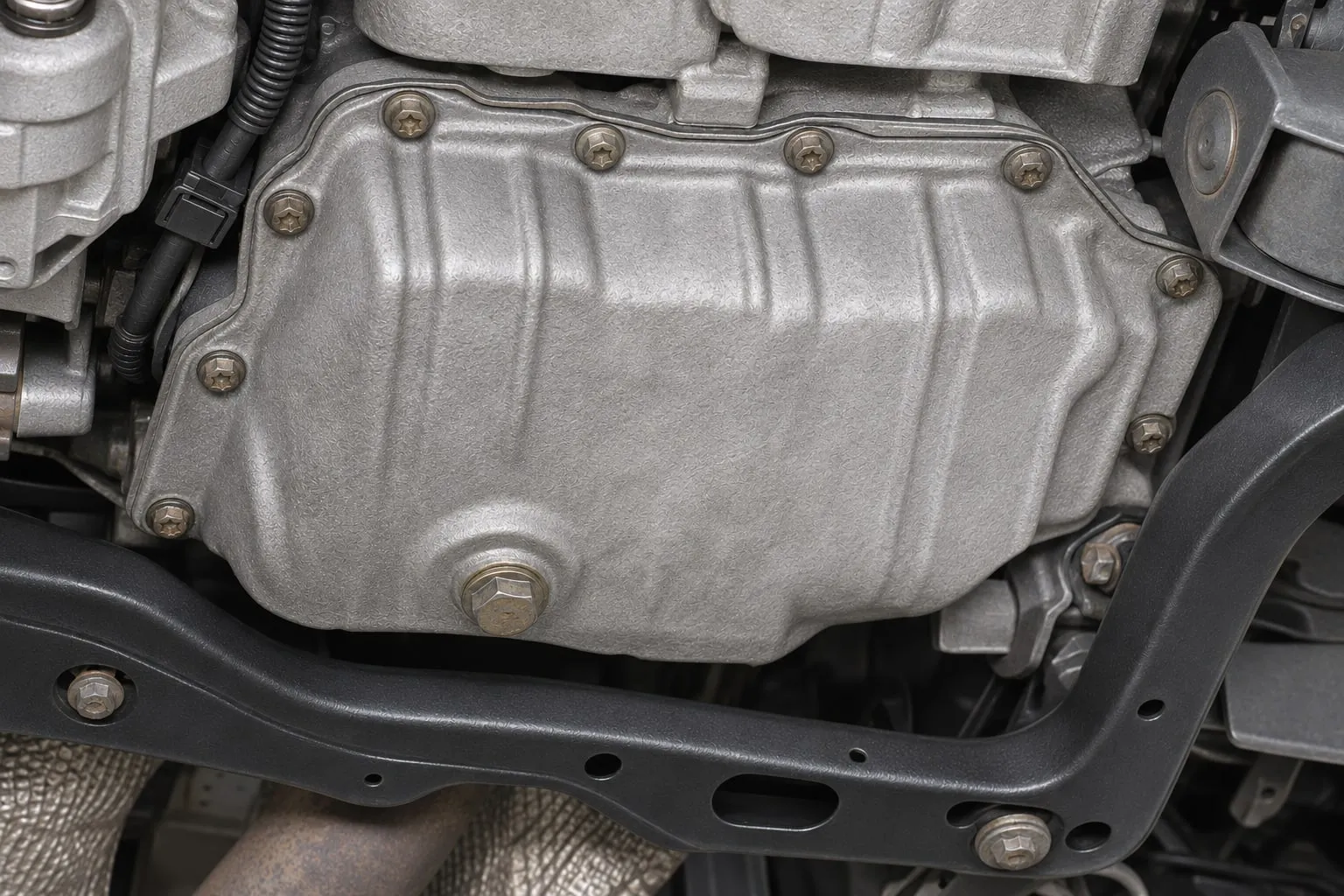
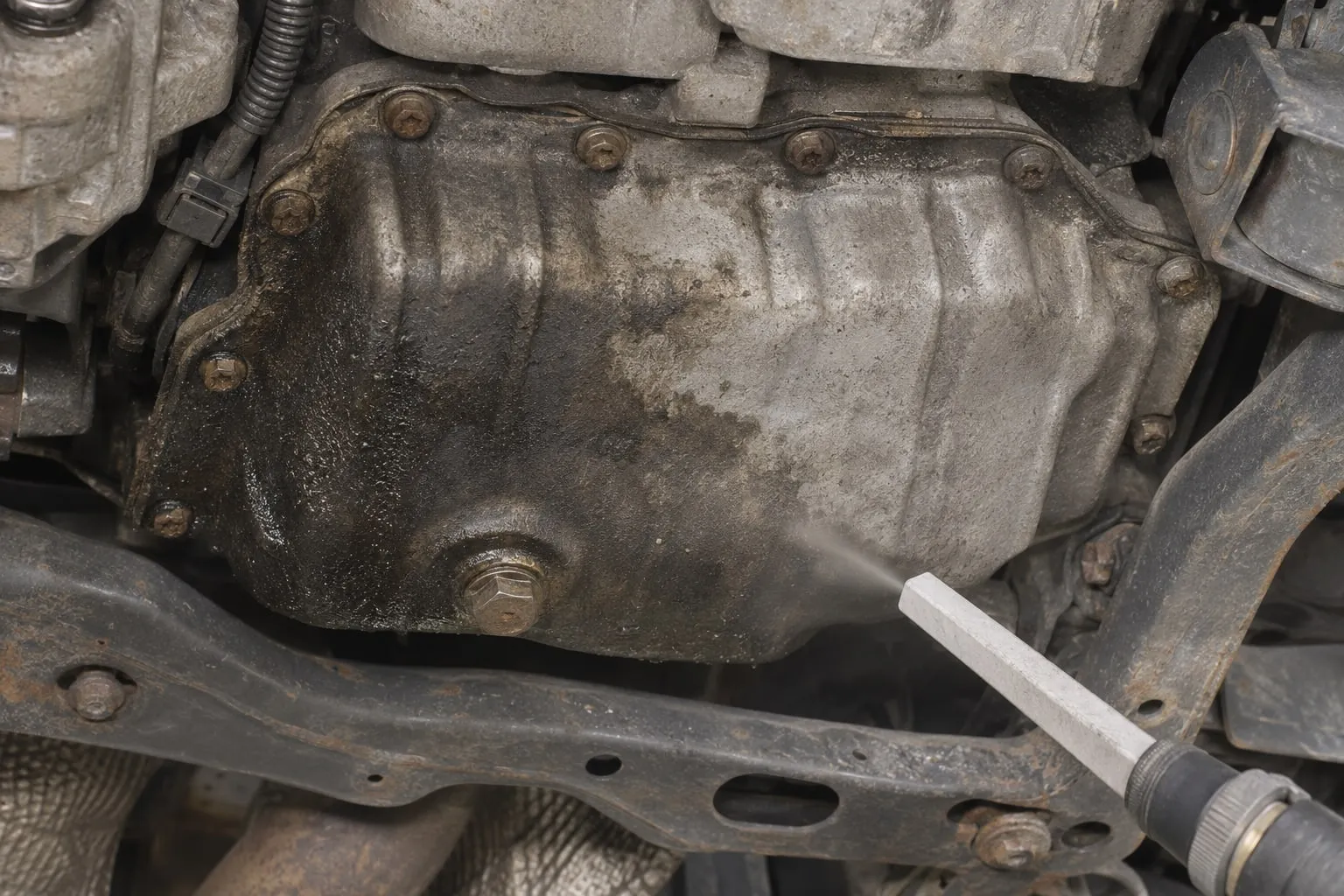
Oil pan before and after
Move the handle and see what dry ice does to grease and deposits.
Technical questions
Will dry ice damage paint or aluminium?
Not with the right pressure and nozzle distance. The pellets are softer than metal and do not grind the surface. On sensitive spots we use lower pressure and smaller pellets.
Is cleaning safe for electrical installations?
Dry ice does not conduct electricity and leaves no moisture, so it is also used on switchboards and motors. Depending on the equipment, we always agree in advance whether and how to cut the power.
Where does the ice go after cleaning?
It sublimates: it turns straight into gas and disperses in the air. All that is left is the removed dirt, and we clean that up.
Why is ventilation needed?
The ice turns into CO₂, which collects near the floor in an enclosed space. That is why we make sure smaller rooms are ventilated and we monitor the level.
Does dry ice remove rust?
Loose rust and the dirt on it, yes. Firm corrosion and old coatings, no. For those we use the laser, often together with dry ice.
Do parts need to be taken apart before cleaning?
Usually not. We clean parts right where they are. Sensitive parts such as connectors or sensors are covered as needed.
Official dry ice distribution
We get our dry ice from official distribution and supply it to companies through the same channel. One-off or regularly.
Send an inquiry
Tell us what you need and add photos if you like. We will get back to you within 24 hours.